
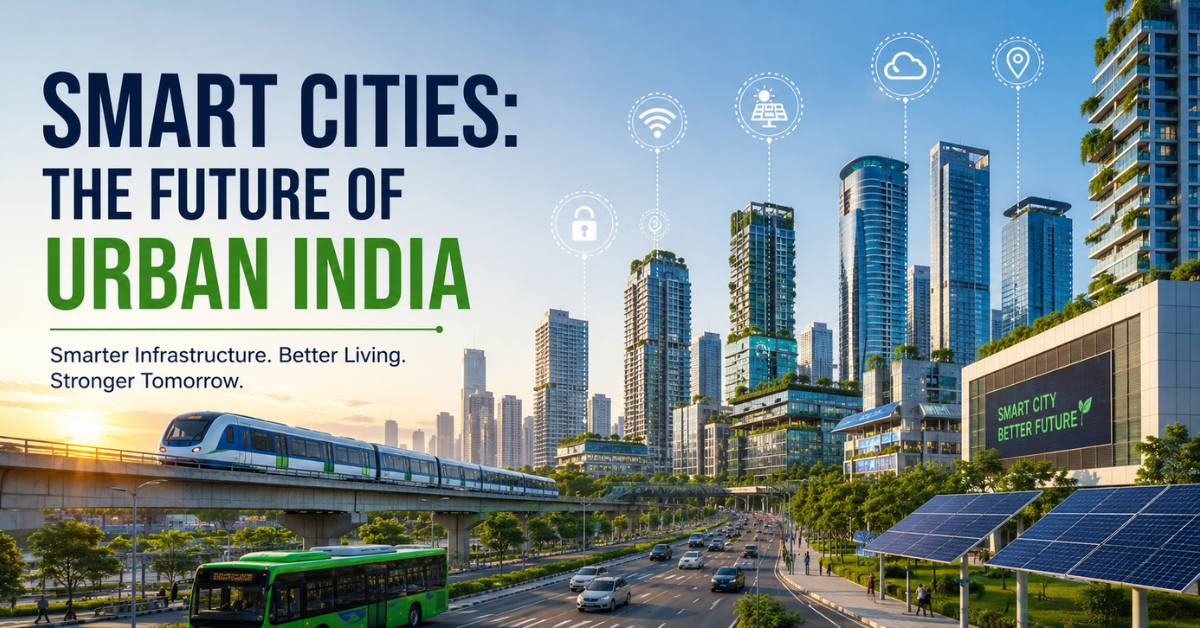
India is rapidly moving toward urbanization. With growing populations, expanding industries, and increasing migration to urban areas, cities are becoming the center of economic growth and modern development. However, rapid urban expansion has also created major challenges such as traffic congestion, pollution, poor waste management, inadequate infrastructure, and pressure on public services.
To solve these urban problems and improve the quality of life, the concept of smart cities has emerged as an important part of India’s future development. Smart cities aim to use technology, sustainable planning, and efficient management systems to create cleaner, safer, and more connected urban environments.
The idea of smart cities is not only about advanced technology but also about building cities that are more livable, environmentally friendly, and efficient for citizens.
What Are Smart Cities?
A smart city is an urban area that uses technology, digital systems, and data-driven solutions to improve public services, infrastructure, transportation, healthcare, safety, and environmental sustainability.
Smart cities focus on:
- Better urban planning
- Efficient public transportation
- Smart energy management
- Digital governance
- Waste management systems
- Clean and green environments
- Improved public safety
- Sustainable development
The goal of a smart city is to make urban life easier, faster, safer, and more comfortable for residents.
Why India Needs Smart Cities
India is one of the fastest-growing countries in the world. Millions of people move to cities every year in search of education, jobs, healthcare, and better opportunities. As urban populations increase, traditional city infrastructure often struggles to meet rising demands.
Many Indian cities currently face problems such as:
- Heavy traffic and overcrowding
- Air and water pollution
- Water shortages
- Poor waste disposal systems
- Increasing energy consumption
- Inadequate public transportation
- Unplanned urban growth
Smart city development can help address these challenges through technology, better planning, and sustainable infrastructure.
Key Features of Smart Cities
Smart Transportation
Traffic congestion is one of the biggest urban problems in India. Smart transportation systems can improve traffic management through:
- Intelligent traffic signals
- Digital parking systems
- Real-time public transport tracking
- Electric vehicles
- Smart roads and surveillance systems
Efficient transport systems reduce travel time, fuel consumption, and pollution.
Sustainable Energy Management
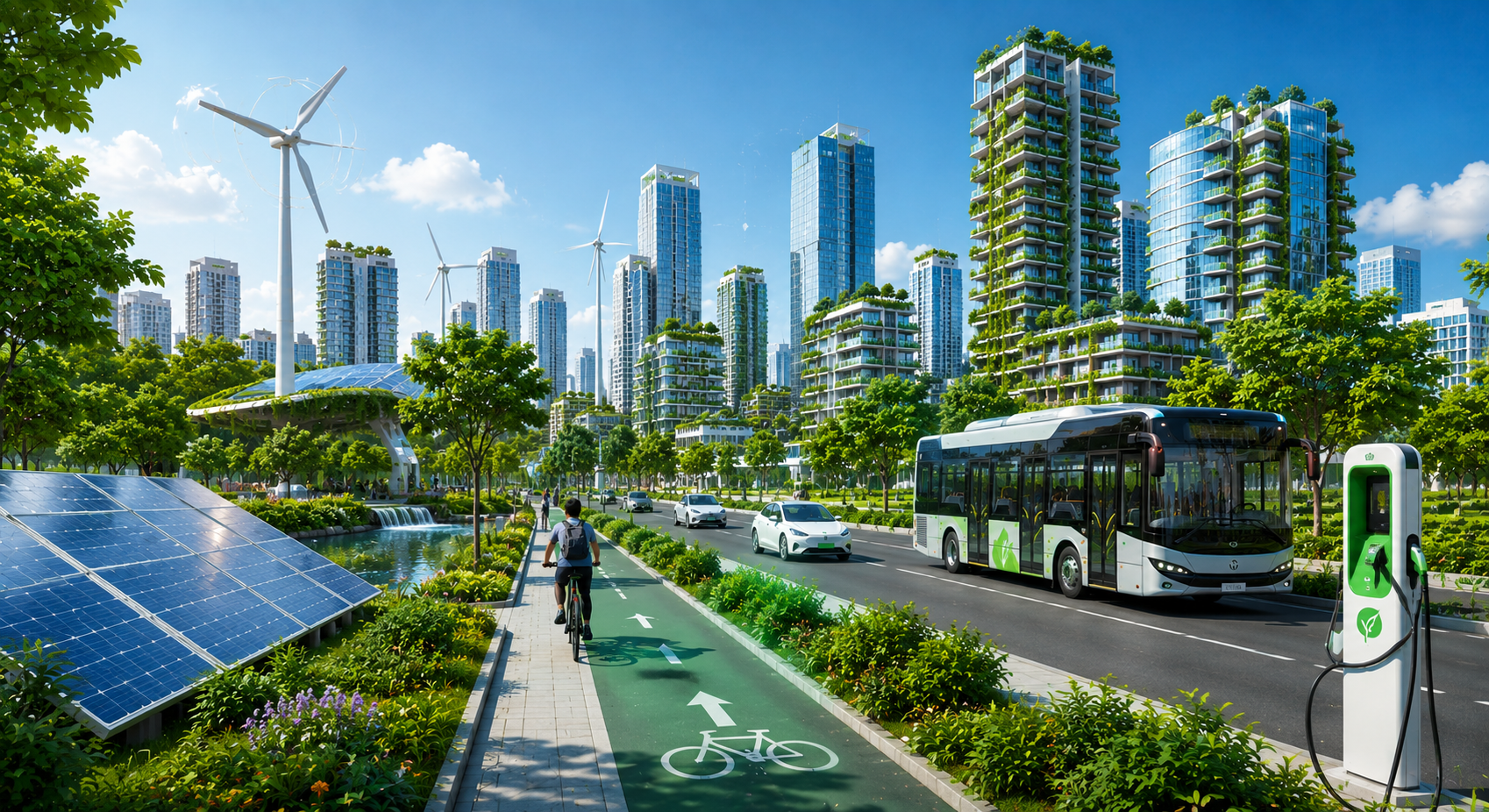
Smart cities promote efficient energy use and renewable energy sources. Solar panels, energy-efficient buildings, and smart electricity grids help reduce environmental impact and lower energy waste.
Smart lighting systems can automatically adjust electricity usage based on traffic and public movement, improving efficiency.
Smart Waste Management
Proper waste management is essential for healthy urban living. Smart cities use technology-based systems for waste collection, segregation, and recycling.
Examples include:
- Sensor-based garbage bins
- Automated waste collection systems
- Recycling initiatives
- Waste-to-energy projects
These systems help keep cities cleaner and reduce environmental pollution.
Digital Governance
Smart cities aim to improve communication between governments and citizens through digital platforms. Online services make public systems faster, more transparent, and more efficient.
Citizens can:
- Pay bills online
- Access government services digitally
- Report civic issues through mobile apps
- Receive real-time public updates
Digital governance reduces paperwork and improves administrative efficiency.
Improved Public Safety
Technology can significantly improve urban safety. Smart surveillance cameras, emergency response systems, and AI-based monitoring help authorities respond quickly to emergencies and criminal activities.
Public safety systems may include:
- CCTV monitoring
- Smart street lighting
- Emergency alert systems
- Disaster management technology
Safer cities improve the overall quality of life for residents.
Environmental Benefits of Smart Cities
Environmental sustainability is a major goal of smart city development. Rapid urbanization often increases pollution, reduces green spaces, and creates pressure on natural resources.
Smart cities encourage:
- Green buildings
- Renewable energy
- Water conservation
- Better sewage systems
- Tree plantation drives
- Eco-friendly public transportation
These efforts help create healthier and more environmentally balanced urban spaces.
Role of Technology in Smart Cities
Technology is the backbone of smart city development. Artificial intelligence, Internet of Things (IoT), data analytics, and automation systems help cities function more efficiently.
Technology supports:
- Traffic monitoring
- Smart water supply systems
- Air quality monitoring
- Digital healthcare services
- Smart education systems
- Energy optimization
By collecting and analyzing data, city authorities can make faster and better decisions for public welfare.
Challenges in Developing Smart Cities
Although smart cities offer many benefits, several challenges still exist in implementing these projects successfully.
Major challenges include:
- High development costs
- Lack of digital awareness
- Cybersecurity concerns
- Infrastructure limitations
- Population pressure
- Unequal access to technology
Proper planning, investment, and public participation are necessary to overcome these obstacles.
Smart Cities Mission in India
The Government of India launched the Smart Cities Mission to improve urban infrastructure and promote sustainable city development. Under this initiative, multiple cities across the country are being upgraded with modern technology and better public services.
The mission focuses on:
- Sustainable urban development
- Citizen-friendly infrastructure
- Improved transportation
- Better sanitation and water systems
- Digital connectivity
- Economic growth opportunities
The project aims to make Indian cities more efficient, inclusive, and future-ready.
Importance of Citizen Participation
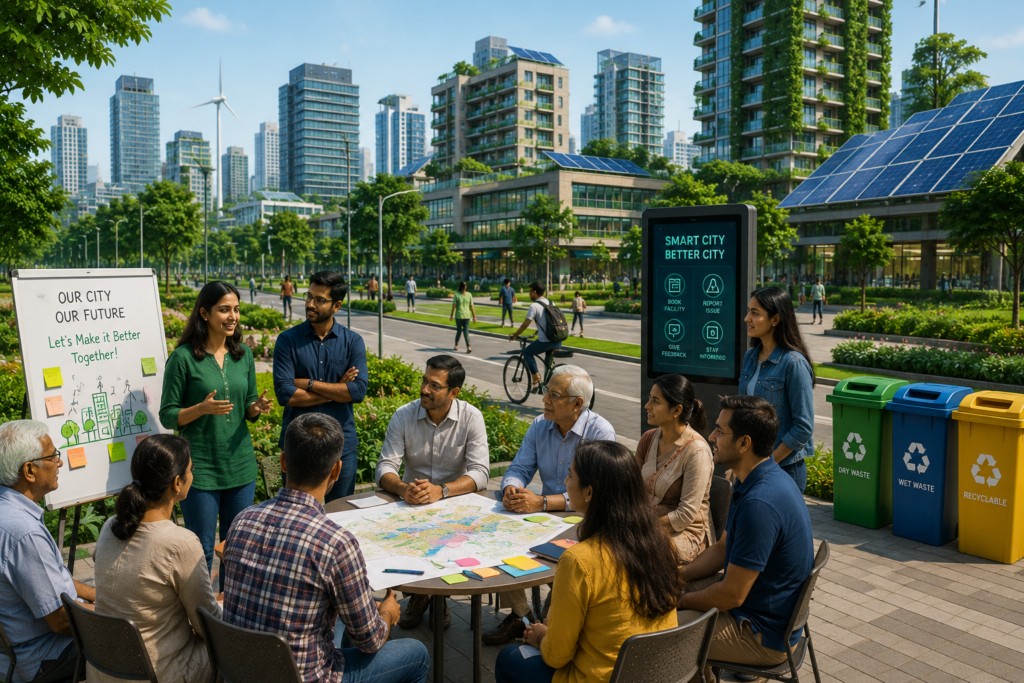
Technology alone cannot create successful smart cities. Citizens also play a major role in maintaining cleanliness, following civic rules, conserving resources, and supporting sustainable practices.
People can contribute by:
- Using public transport
- Conserving water and electricity
- Supporting waste segregation
- Following traffic rules
- Participating in community programs
Smart cities become successful when governments and citizens work together responsibly.
Conclusion
Smart cities represent the future of urban India. They combine technology, sustainability, and modern infrastructure to improve the quality of life for millions of people.
As India continues to urbanize rapidly, smart city development can help solve many urban challenges such as pollution, traffic, waste management, and inefficient public services. With better planning, digital innovation, environmental responsibility, and citizen participation, Indian cities can become cleaner, safer, and more sustainable.
The future of urban India will depend on how effectively technology and responsible governance are used to create cities that are not only modern but also inclusive and environmentally balanced.
Leave a Reply