
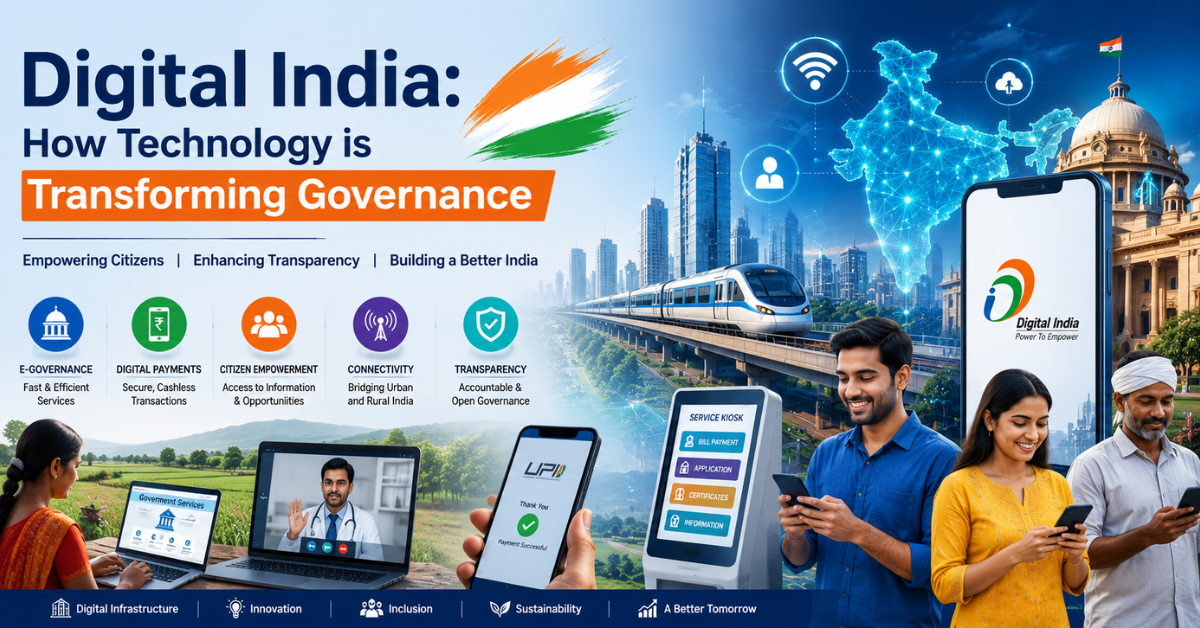
India is experiencing a major digital transformation. Over the past decade, technology has changed the way people communicate, learn, shop, work, and access public services. The government’s “Digital India” initiative has played a significant role in bringing technology closer to citizens and improving the efficiency of governance across the country.
Digital India is not only about internet access or smartphones. It represents a broader vision of creating a digitally empowered society and a knowledge-based economy. Through digital platforms, online services, and advanced technology, governance is becoming faster, more transparent, more accessible, and more citizen-friendly.
From online banking and digital payments to e-governance services and digital healthcare, technology is reshaping the relationship between citizens and the government.
What Is Digital India?
Digital India is a flagship initiative launched by the Government of India with the goal of transforming the country into a digitally connected society. The mission focuses on improving digital infrastructure, increasing internet accessibility, and delivering government services electronically.
The main objectives of Digital India include:
- Providing digital access to citizens
- Improving online government services
- Promoting digital literacy
- Encouraging cashless transactions
- Expanding internet connectivity
- Strengthening digital infrastructure
- Increasing transparency in governance
The initiative aims to make technology available to people from both urban and rural areas.
Growth of E-Governance in India
E-governance refers to the use of digital technology to provide government services and information to citizens. Earlier, many public services required long paperwork processes, physical visits to offices, and lengthy waiting times. Today, many of these services are available online.
Citizens can now:
- Apply for official documents online
- Pay utility bills digitally
- Access government schemes through portals
- File taxes online
- Register complaints digitally
- Track applications in real time
Digital governance has reduced paperwork, improved efficiency, and increased transparency in administrative systems.

Digital Payments and Financial Inclusion
One of the biggest achievements of Digital India has been the rapid growth of digital payments. Platforms such as UPI, mobile banking, and digital wallets have transformed financial transactions across the country.
Digital payment systems offer:
- Faster transactions
- Secure online payments
- Easy money transfers
- Reduced dependency on cash
- Better financial access for rural populations
Even small businesses, street vendors, and local shops are now using digital payment methods, contributing to a more connected digital economy.
Technology in Public Services
Technology is improving the delivery of essential public services in India. Government departments are increasingly using digital systems to make services more efficient and accessible.
Examples include:
- Online education platforms
- Digital healthcare consultations
- Smart transportation systems
- Digital land records
- Online appointment booking
- Aadhaar-based services
These systems help save time, reduce corruption, and improve service delivery for citizens.
Role of Internet Connectivity
Internet access is the foundation of digital transformation. Expanding internet connectivity to rural and remote areas has become an important part of Digital India.
Better internet access helps people:
- Access educational resources
- Use online government services
- Learn digital skills
- Start online businesses
- Connect with financial services
Rural digital connectivity is helping reduce the gap between urban and rural development.
Importance of Digital Literacy
Technology can only create change when people know how to use it effectively. Digital literacy helps citizens understand online systems, digital payments, cybersecurity, and internet services.
Digital literacy programs encourage people to:
- Use smartphones and computers
- Access online information safely
- Protect personal data
- Use digital banking services
- Apply for government schemes online
Improving digital awareness is essential for inclusive digital growth.
Transparency and Accountability in Governance
Technology has increased transparency in government systems. Digital records and online tracking systems make administrative processes more accountable and reduce the chances of corruption.
Digital governance improves:
- Public access to information
- Faster grievance redressal
- Monitoring of government projects
- Transparency in welfare schemes
- Direct benefit transfers
Citizens now have better visibility into how government services operate.
Challenges in Digital Transformation
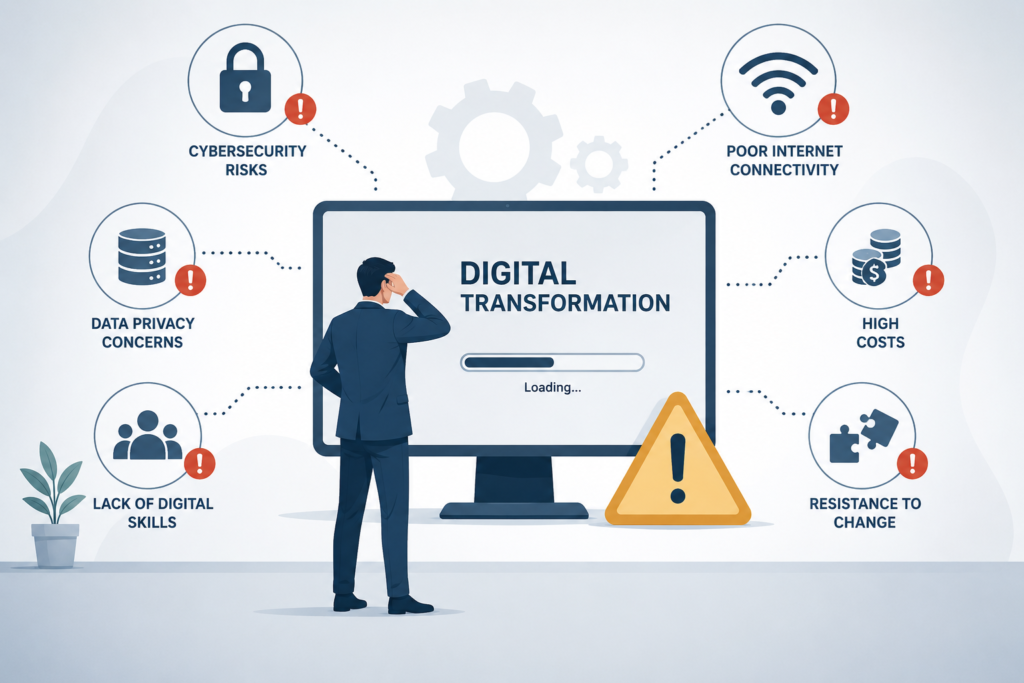
Despite major progress, India still faces several challenges in achieving complete digital transformation.
Key challenges include:
- Limited internet access in some areas
- Lack of digital awareness
- Cybersecurity risks
- Data privacy concerns
- Technical infrastructure limitations
- Digital divide between urban and rural populations
Addressing these issues is necessary for creating a secure and inclusive digital ecosystem.
Future of Digital Governance in India
The future of governance in India will depend heavily on technology and innovation. Artificial intelligence, cloud computing, data analytics, blockchain, and automation are expected to further improve public administration.
Future digital governance may include:
- AI-based public services
- Smart cities and smart infrastructure
- Advanced digital healthcare systems
- Automated public service delivery
- Stronger cybersecurity systems
- Faster digital communication between citizens and authorities
As technology continues to evolve, governance is likely to become more efficient, transparent, and citizen-focused.
Conclusion
Digital India has become a major step toward transforming governance and public services in the country. Technology is helping improve transparency, efficiency, accessibility, and communication between citizens and the government.
From digital payments and online education to e-governance and internet connectivity, technology is reshaping the way India functions. Although challenges such as digital literacy and cybersecurity still exist, continuous innovation and infrastructure development can help create a stronger digital future.
The success of Digital India will depend not only on technological advancement but also on ensuring that every citizen has equal access to digital opportunities and services.
Leave a Reply