
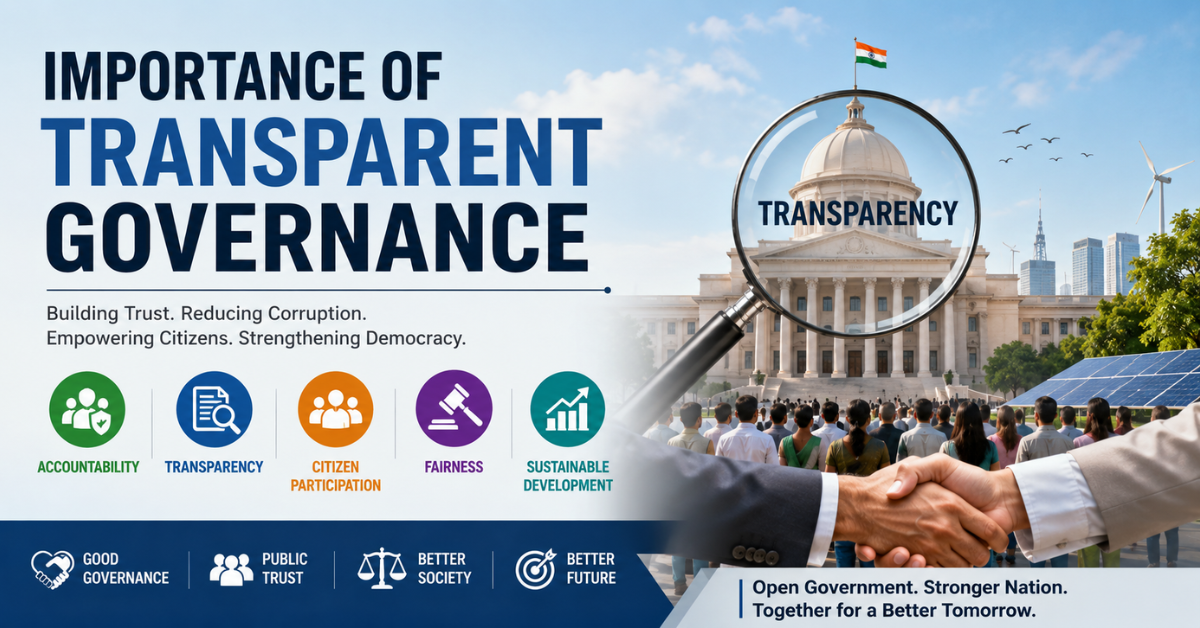
Good governance is the foundation of a strong and successful society. It ensures that public institutions work efficiently, laws are implemented fairly, and citizens receive quality services. Among the many principles of good governance, transparency is considered one of the most important. Transparent governance helps build trust between governments and citizens by making decision-making processes open, accessible, and accountable.
In today’s digital era, citizens expect greater access to information and a better understanding of how governments operate. Transparency not only improves public confidence but also strengthens democratic values, reduces corruption, and promotes responsible administration. As societies become more informed and connected, transparent governance has become essential for sustainable development and effective public service delivery.
What Is Transparent Governance?
Transparent governance refers to the practice of making government activities, decisions, policies, and financial transactions accessible and understandable to the public. It allows citizens to access information about how public resources are used and how decisions are made.
Transparent governance involves:
- Open access to government information
- Clear communication of policies and decisions
- Public participation in decision-making
- Accountability of public officials
- Easy access to government services and records
The goal is to ensure that governments operate openly and responsibly while maintaining public trust.
Why Transparency Matters in Governance
Transparency is essential because it creates a direct connection between governments and citizens. When people understand how decisions are made and how resources are allocated, they are more likely to trust public institutions.
Benefits of transparency include:
- Increased public trust
- Better decision-making
- Stronger democratic processes
- Improved citizen engagement
- Greater accountability
Transparent systems encourage governments to act in the public interest and maintain high standards of governance.
Role of Transparency in Reducing Corruption
Corruption remains one of the biggest challenges facing governments worldwide. Lack of transparency often creates opportunities for misuse of power, financial irregularities, and unethical practices.
Transparent governance helps reduce corruption by:
- Making financial transactions visible
- Monitoring public spending
- Ensuring open procurement processes
- Allowing independent audits
- Encouraging public oversight
When government operations are open to scrutiny, it becomes more difficult for corruption to occur unnoticed.
Strengthening Accountability Through Transparency
Accountability is a key component of effective governance. Public officials and institutions must be responsible for their actions and decisions.
Transparency supports accountability by:
- Providing access to performance reports
- Tracking government projects and spending
- Allowing citizens to monitor public services
- Encouraging regular reporting and evaluation
When citizens can access accurate information, they can hold institutions accountable for their commitments and responsibilities.

Citizen Participation and Public Trust
Transparent governance encourages citizens to participate in public affairs. People are more willing to engage in governance when they believe their voices matter and when information is readily available.
Transparency promotes:
- Public consultations
- Community involvement
- Open discussions on policies
- Feedback mechanisms
- Greater civic engagement
As participation increases, governments gain valuable insights that help improve policies and public services.
Digital Technology and Transparent Governance
Technology has transformed the way governments communicate with citizens. Digital platforms now make it easier to share information, deliver services, and improve transparency.
Examples include:
- Online government portals
- Digital public records
- E-governance platforms
- Open data initiatives
- Real-time service tracking systems
Digital tools improve accessibility and help citizens obtain information quickly and efficiently.
Economic Benefits of Transparent Governance
Transparency is not only beneficial for citizens but also for economic development. Investors and businesses prefer environments where government processes are clear, predictable, and fair.
Transparent governance supports economic growth by:
- Encouraging investment
- Improving business confidence
- Reducing administrative barriers
- Enhancing regulatory efficiency
- Promoting fair competition
Countries with transparent institutions often experience stronger economic performance and greater investor confidence.
Challenges in Achieving Transparency
Despite its importance, achieving full transparency can be challenging. Governments may face technical, administrative, and institutional obstacles.
Common challenges include:
- Limited access to information
- Bureaucratic complexity
- Resistance to change
- Weak digital infrastructure
- Data privacy concerns
- Lack of public awareness
Addressing these challenges requires strong policies, modern technology, and a commitment to openness.

Future of Transparent Governance
The future of governance will be increasingly shaped by technology, data, and citizen engagement. Governments around the world are adopting innovative solutions to improve transparency and accountability.
Future trends may include:
- Artificial intelligence in public administration
- Blockchain-based record systems
- Open government data platforms
- Smart governance solutions
- Enhanced digital participation tools
These innovations can help create more responsive, efficient, and transparent public institutions.
Conclusion
Transparent governance is essential for building trust, reducing corruption, improving accountability, and strengthening democracy. It enables citizens to understand how governments operate and encourages greater participation in public affairs.
As technology continues to evolve, transparency will become even more important in ensuring effective governance and sustainable development. By embracing openness, accountability, and citizen engagement, governments can create stronger institutions and a more informed, empowered society.
Leave a Reply