
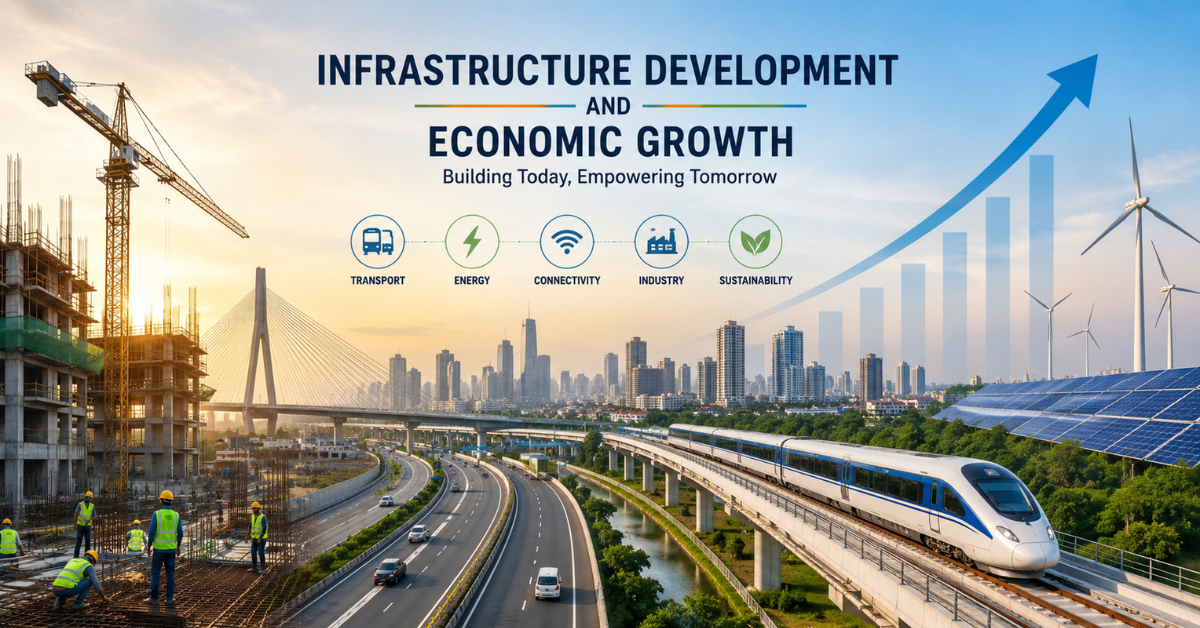
Infrastructure is one of the most important foundations of a country’s progress. A nation cannot achieve long-term economic success without strong roads, transportation systems, electricity, communication networks, healthcare facilities, and modern digital services. Infrastructure connects people, industries, businesses, and markets, helping economies grow faster and function more efficiently.
As countries continue to develop, infrastructure becomes essential for improving productivity, supporting industries, creating jobs, and enhancing the overall quality of life. Modern infrastructure not only strengthens the economy but also improves education, healthcare, trade, tourism, and public services.
For rapidly developing nations like India, infrastructure development is considered a key factor in achieving sustainable and inclusive economic growth.
Understanding Infrastructure Development
Infrastructure development refers to building and improving the physical systems and public facilities required for the smooth functioning of society and the economy.
It includes:
- Roads and highways
- Railways and metro systems
- Airports and ports
- Electricity and energy supply
- Water and sanitation systems
- Internet and communication networks
- Schools and hospitals
These systems support daily life and help industries, businesses, and services operate efficiently.
Connection Between Infrastructure and Economic Growth
Economic growth and infrastructure development are closely linked. Countries with advanced infrastructure often experience higher industrial productivity, stronger trade, and better investment opportunities.
Well-developed infrastructure helps economies by:
- Improving transportation efficiency
- Reducing operational costs
- Increasing industrial output
- Supporting business expansion
- Encouraging domestic and foreign investment
- Enhancing public convenience
When transportation and communication systems become faster and more reliable, businesses can operate more effectively and markets become more accessible.
Importance of Transportation Infrastructure
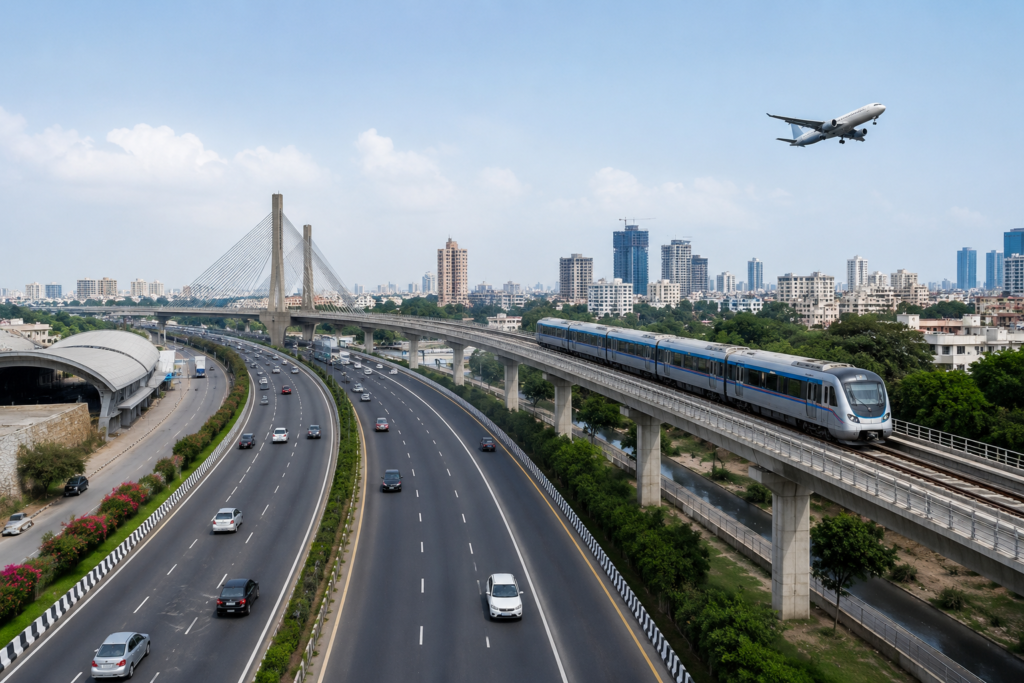
Transportation infrastructure plays a major role in connecting cities, industries, and rural areas. Roads, railways, airports, and ports help move people and goods quickly and efficiently.
Efficient transportation systems provide several benefits:
- Faster delivery of products
- Reduced travel time
- Growth in trade and commerce
- Better connectivity between regions
- Development of tourism and logistics industries
Modern transportation networks also improve mobility and contribute to urban development.
Energy Infrastructure and Industrial Development
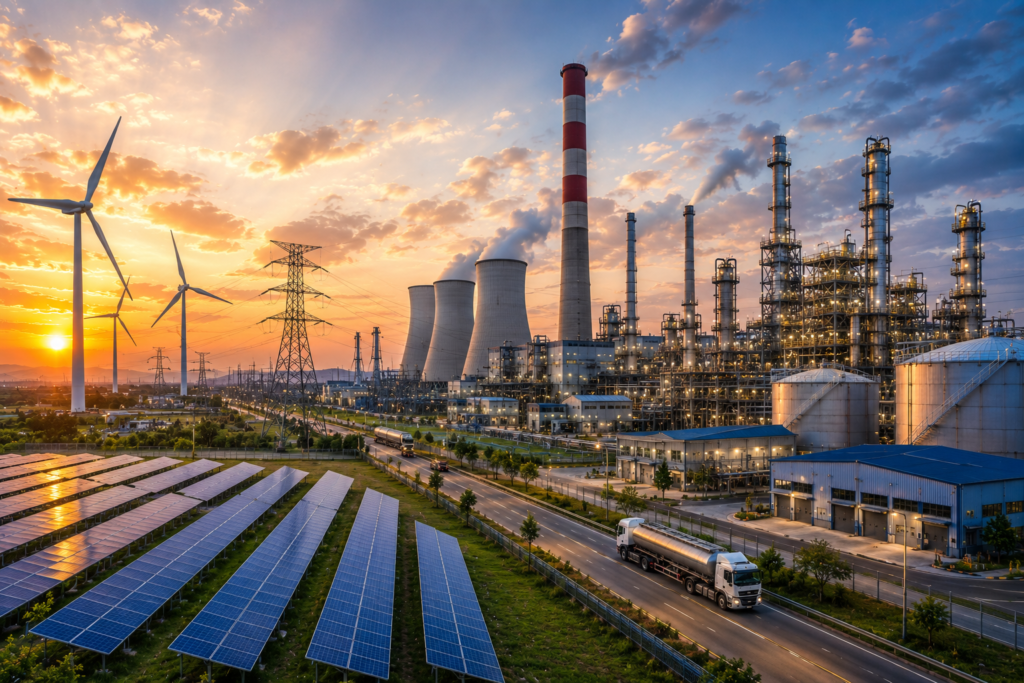
Industries and businesses depend heavily on reliable energy systems. Electricity powers factories, offices, hospitals, schools, transportation systems, and digital services.
Energy infrastructure includes:
- Power generation plants
- Renewable energy systems
- Transmission networks
- Solar and wind energy projects
A stable energy supply increases industrial productivity and supports economic stability. Countries with strong energy infrastructure are better prepared for industrial growth and technological advancement.
Digital Infrastructure and the Modern Economy
Digital infrastructure has become increasingly important in today’s technology-driven world. Internet services, mobile networks, cloud systems, and data centers are transforming communication, governance, education, and commerce.
Digital infrastructure supports:
- Online businesses and e-commerce
- Digital payments and banking
- Remote learning and online education
- E-governance services
- Information sharing and communication
Strong digital systems improve efficiency and help economies become more competitive globally.

Infrastructure Development and Employment
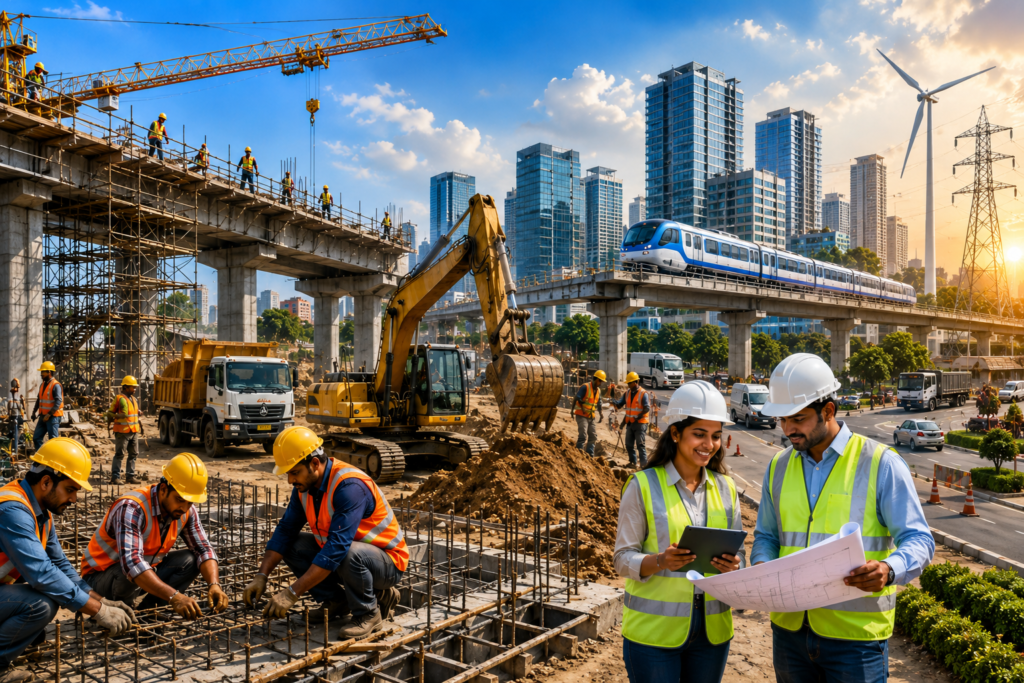
Large infrastructure projects create significant employment opportunities. Construction activities require engineers, architects, technicians, machine operators, and labor workers.
Infrastructure growth also generates indirect employment in sectors such as:
- Manufacturing
- Real estate
- Transportation
- Tourism
- Technology services
- Retail and trade
As infrastructure expands, businesses grow and new economic opportunities emerge for local communities.
Rural Infrastructure and Inclusive Growth
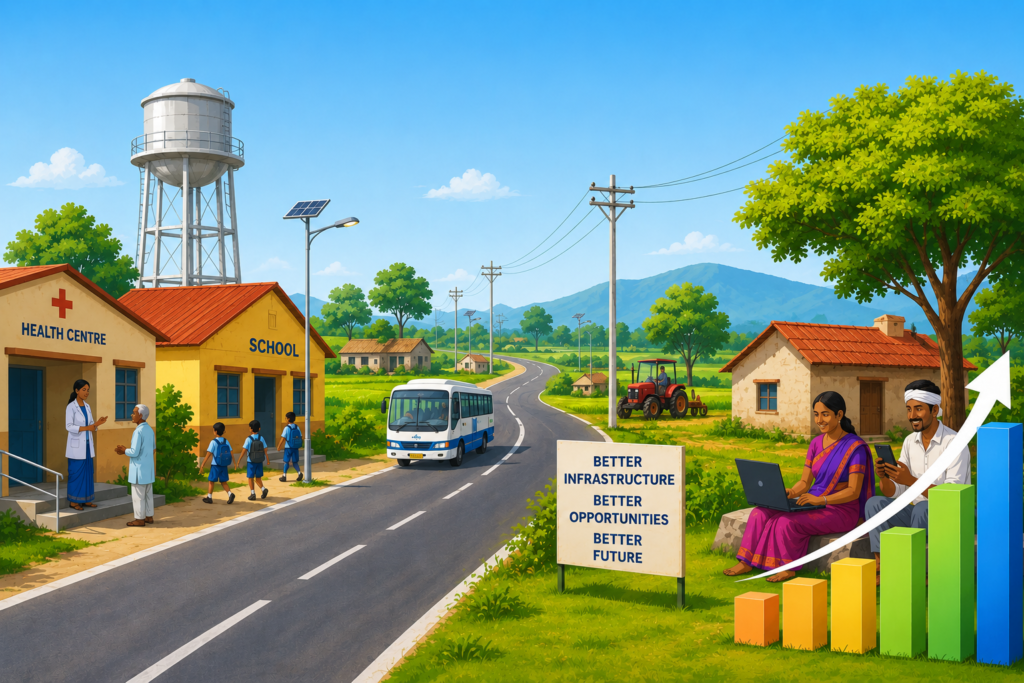
Infrastructure development is equally important in rural areas. Villages require proper roads, electricity, healthcare facilities, irrigation systems, schools, and internet connectivity for balanced development.
Rural infrastructure helps:
- Improve agricultural productivity
- Increase access to markets
- Strengthen healthcare and education
- Reduce regional inequality
- Improve living standards
Better rural infrastructure supports inclusive growth by connecting remote areas with economic opportunities.
Challenges in Infrastructure Development
Despite its importance, infrastructure development faces many difficulties. Developing large-scale projects often requires huge investments, proper planning, and long-term management.
Some major challenges include:
- High construction and maintenance costs
- Land acquisition issues
- Environmental concerns
- Delays in project completion
- Rapid population growth
- Limited funding and resources
Addressing these problems is essential for successful infrastructure expansion.
Sustainable Infrastructure for the Future
Modern infrastructure development must focus on sustainability and environmental protection. Eco-friendly infrastructure reduces pollution and helps conserve natural resources.
Sustainable infrastructure includes:
- Green buildings
- Renewable energy projects
- Smart transportation systems
- Water conservation technologies
- Waste management facilities
- Smart cities and eco-friendly urban planning
Sustainable development ensures that economic growth does not harm the environment.
Role of Government and Private Sector
Infrastructure development requires cooperation between governments and private companies. Governments create policies, invest in public projects, and improve regulations, while private companies contribute through technology, expertise, and financial investment.
Public-private partnerships help:
- Improve project efficiency
- Increase investment opportunities
- Speed up infrastructure projects
- Introduce innovation and advanced technology
Collaboration between both sectors can accelerate national development.
Conclusion
Infrastructure development is one of the strongest pillars of economic progress. Efficient transportation, reliable energy systems, digital connectivity, and modern public services improve productivity, strengthen industries, and create employment opportunities.
For countries like India, infrastructure is essential for supporting economic growth, improving living standards, and increasing global competitiveness. At the same time, future development must focus on sustainability, environmental protection, and equal access to resources.
With proper planning, investment, innovation, and responsible development, infrastructure can help create a stronger, more connected, and economically stable future for society.
Leave a Reply