
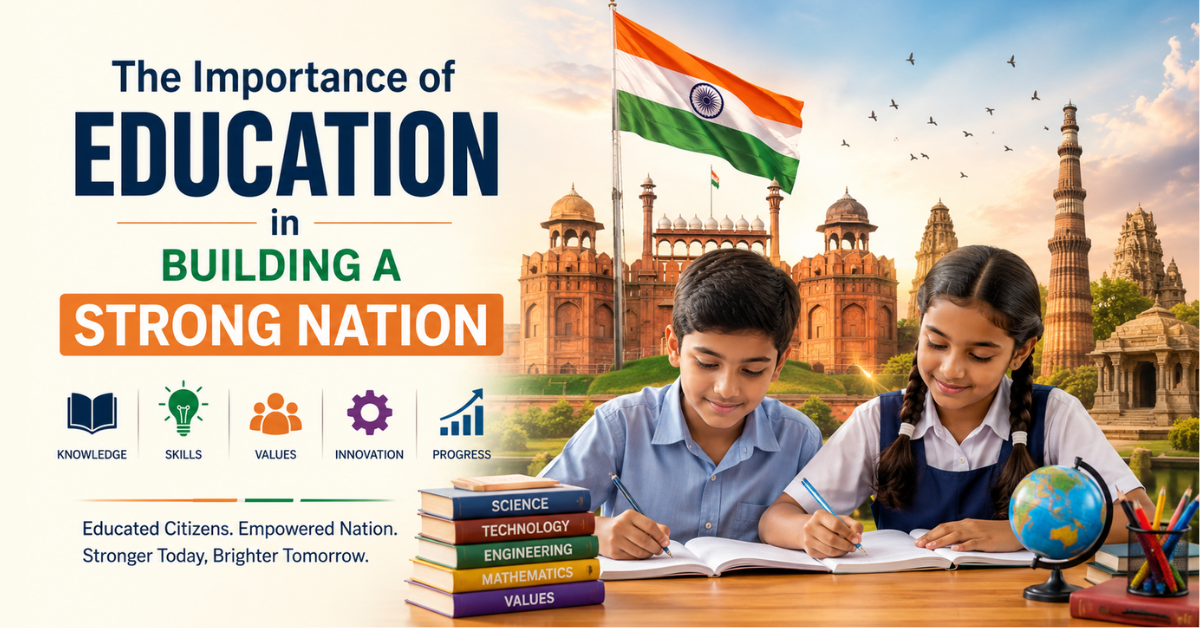
A nation is only as strong as the minds it cultivates. The importance of education has never been more urgent — not just as a personal milestone, but as the single most reliable pillar upon which prosperous, stable, and politically sound societies are built. If you are above 30, you have lived through enough of history to recognise this truth from personal experience: the communities that invest in learning are the ones that endure.
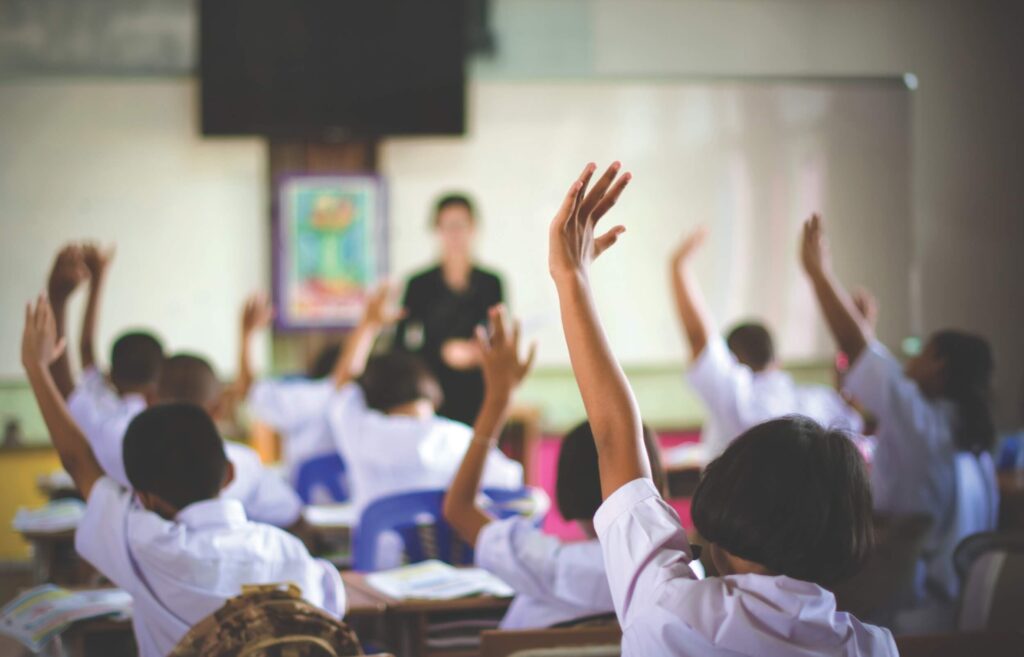
Why Education Is the Foundation of National Strength
Every strong nation in the modern world — Germany, Singapore, Japan, Finland — shares one common thread: an unwavering commitment to education at every level of society.
Education does not merely produce doctors and engineers. It produces informed citizens. People who can read, reason, and reflect are far less susceptible to misinformation, political manipulation, and social unrest. A well-educated electorate is the most powerful safeguard a democracy can have.
According to UNESCO, countries that increase their average schooling by just one year see GDP per capita rise by 8–10%. That is not a marginal gain — it is a structural shift in a nation’s economic trajectory.
The Political Dimension: Education and Governance
The importance of education extends deeply into political life. Nations with higher literacy rates consistently demonstrate:
- Greater political participation — Educated citizens vote more, engage with policy, and hold governments accountable.
- Lower rates of corruption — A 2019 study published in the Journal of Development Economics found a significant inverse relationship between educational attainment and perceived corruption in governance.
- More stable institutions — Societies with broad access to quality education build stronger judicial systems, free press, and civil society organisations.
This is not coincidence. When people understand their rights, they are better positioned to defend them. When they understand public finance, they can question how their taxes are spent. Education transforms passive subjects into active citizens — and active citizens build strong nations.
The Risk of Ignoring This Link
Conversely, nations that neglect education pay a compounding political price. High dropout rates, underfunded schools, and inequitable access to learning fuel resentment, unemployment, and radicalism. The World Bank estimates that 617 million children and adolescents worldwide cannot read or do basic mathematics — a figure that represents not just an educational crisis, but a political time bomb for the next generation of governments.
Economic Strength Follows Educational Investment
Beyond politics, the importance of education is clearest in economic data. Consider:
- The OECD reports that a person with tertiary education earns, on average, 56% more than someone with only upper-secondary education.
- Countries that rank highest on the Human Development Index (HDI) — Norway, Switzerland, Iceland — consistently invest more than 6% of their GDP in education.
- India’s IT boom, which generated over $200 billion in exports in 2023, was built almost entirely on a generation of technically educated graduates from IITs and regional engineering colleges.
Education is not an expense. It is a nation’s most strategic long-term investment.

Social Cohesion and Cultural Progress
Building a Shared Identity
A strong nation is not merely one with high GDP — it is one where citizens share a sense of mutual responsibility. Education plays a crucial role here. Shared curricula, civic education, and exposure to history build a common identity that transcends ethnicity, religion, or class.
Countries like Singapore have explicitly used education policy as a tool for social cohesion, creating a bilingual system that respects cultural heritage while forging a unified national identity. The results speak for themselves: Singapore consistently ranks among the top three nations globally in mathematics and science literacy (PISA 2022).
Health, Family, and Community
The benefits of education ripple outward into every corner of society:
- Educated mothers are more likely to immunise their children, reducing infant mortality rates significantly. UNICEF data shows that a child born to a mother with at least secondary education is 50% more likely to survive beyond age five.
- Communities with higher educational attainment report lower crime rates, higher volunteerism, and stronger mental health outcomes.
- Educated individuals are more likely to contribute to environmental awareness and sustainable behaviour — a necessity for any nation planning beyond the next election cycle.
The Inequality Problem: Education Must Be Equitable
Here lies the hard truth that many national conversations avoid. The importance of education is meaningless if access to quality schooling remains deeply unequal.
In many countries — including some of the world’s largest democracies — the quality of a child’s education depends almost entirely on the postal code they were born into, or the income of their parents. This is not a natural law. It is a policy failure.
When education is distributed unequally:
- Talent is wasted at scale
- Social mobility stalls
- Political resentment grows
- National productivity underperforms its potential
Nations that have achieved genuine strength — educational and otherwise — have done so by treating access to quality schooling as a right, not a privilege. Finland’s education system, regularly ranked among the world’s best, has no private schools in the traditional sense. Every child attends the same quality of institution. The results are remarkable: high achievement, low inequality, and a politically engaged citizenry.

What a Strong Nation Must Do: A Call to Action
If a nation is serious about its future, the path is clear. Governments, institutions, and citizens above all must advocate for:
- Universal access to quality education — from early childhood development through secondary school, without exception.
- Investment in teacher quality — the single most important school-level factor in student outcomes, per decades of research.
- Curriculum relevance — education must evolve with the economy. Digital literacy, critical thinking, and civic education are no longer optional.
- Equity as a non-negotiable — closing gaps in educational access between rural and urban, rich and poor, is a matter of national security.
- Lifelong learning culture — in a world where industries transform every decade, adults above 30 must have access to reskilling and continuing education, not just the young.
Conclusion: The Importance of Education Is Never Just Personal
Education shapes individuals. But at scale, it shapes civilisations. The importance of education is not a slogan for school brochures — it is the central political and moral challenge of our time.
Strong nations are not built by geography, natural resources, or historical luck alone. They are built by generations of educated, engaged, and empowered citizens. If we want political stability, economic resilience, and a society worth handing to the next generation, the answer has always been the same: invest in education, without compromise, without exception.
The nations that understand this will lead the century. The ones that do not will be studying why they did not.
Leave a Reply