
Introduction
The twenty-first century is often described as the age of progress. Cities are expanding rapidly, technology is evolving every day, industries are growing, and human lifestyles are becoming more advanced than ever before. While this development has improved comfort and economic opportunities, it has also created serious environmental and social challenges. Rising pollution levels, climate change, water scarcity, loss of forests, and increasing inequality have become global concerns.
For decades, development was measured mainly through economic growth. Countries focused on industrialization, infrastructure, and higher production without fully considering the environmental consequences. However, the growing damage to nature has made it clear that uncontrolled growth cannot continue forever. This realization gave rise to the concept of sustainable development — a model of growth that supports economic progress while protecting the environment and ensuring social well-being.
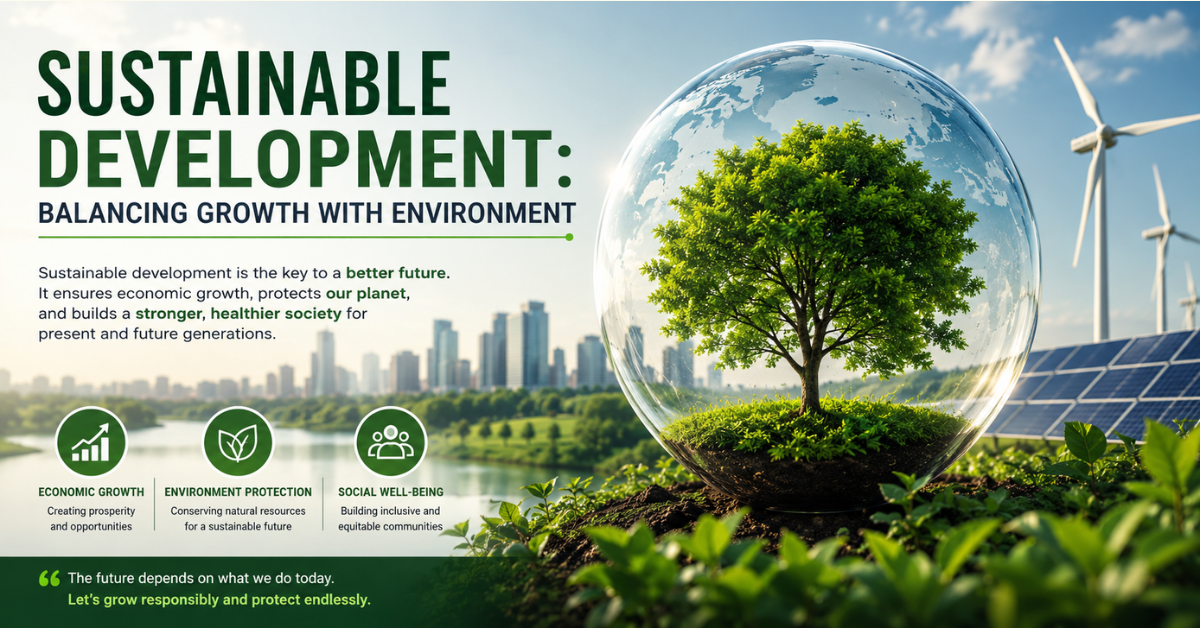
Sustainable development is not simply about planting trees or reducing pollution. It is a broader vision for creating a world where economic success, environmental protection, and human welfare exist together in balance. It encourages humanity to rethink the way resources are used and how development should take place in the future.
What Is Sustainable Development?
Sustainable development refers to development that fulfills present needs without harming the ability of future generations to fulfill theirs. It is a long-term strategy that focuses on responsible growth rather than short-term gains.
The concept became globally popular after the publication of the Brundtland Commission Report in 1987. Since then, governments, industries, and environmental organizations around the world have adopted sustainability as a central goal.
Sustainable development is built on the belief that:
- Natural resources are limited.
- Economic growth should not destroy ecosystems.
- Social equality is essential for long-term progress.
- Human development and environmental conservation must work together.
In simple words, sustainable development means creating a better world today without damaging tomorrow.
Why Sustainable Development Matters Today
The importance of sustainable development has increased significantly because the planet is facing multiple crises simultaneously.
Climate Change Is Becoming Severe
Global temperatures are rising due to excessive greenhouse gas emissions. Heatwaves, floods, droughts, melting glaciers, and rising sea levels are becoming more common. These environmental changes affect agriculture, water supply, human health, and economies worldwide.
Sustainable development promotes renewable energy, clean transportation, and eco-friendly practices that help reduce carbon emissions and fight climate change.
Natural Resources Are Depleting
Human activities consume enormous amounts of water, coal, oil, forests, and minerals every year. Many of these resources take millions of years to form or cannot be replaced easily.
If resources continue to be used irresponsibly, future generations may face severe shortages. Sustainable development focuses on conservation, recycling, and efficient resource management.
Pollution Threatens Human Health
Air pollution, plastic waste, industrial chemicals, and contaminated water sources are damaging ecosystems and causing serious diseases. Millions of people die every year due to pollution-related health issues.
Sustainable development encourages cleaner technologies and waste management systems to improve public health and environmental quality.
The Three Dimensions of Sustainability
1. Environmental Sustainability
Environmental sustainability aims to protect ecosystems and maintain ecological balance. It includes:
- Conserving forests and wildlife
- Reducing pollution
- Using renewable energy
- Protecting water resources
- Promoting biodiversity
Healthy ecosystems are necessary for clean air, food production, climate regulation, and human survival.
2. Economic Sustainability
Economic sustainability ensures long-term growth without exhausting natural resources. It promotes industries and businesses that:
- Use energy efficiently
- Reduce waste
- Invest in innovation
- Create sustainable jobs
- Support green technologies
A sustainable economy focuses on quality growth rather than uncontrolled expansion.
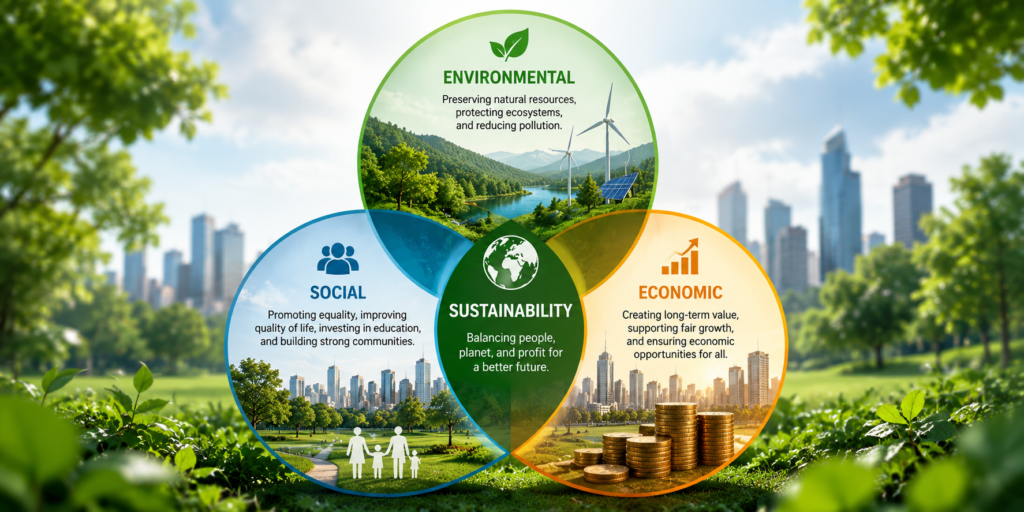
3. Social Sustainability
Social sustainability focuses on improving human life and reducing inequality. It includes:
- Access to education
- Healthcare facilities
- Gender equality
- Poverty reduction
- Human rights protection
- Safe working conditions
No society can become truly sustainable if large sections of people remain poor or excluded from opportunities.
Sustainable Development and Technology
Technology plays a major role in achieving sustainability. Today, innovation is helping societies reduce environmental damage while maintaining growth.
Examples include:
- Electric vehicles reducing fuel pollution
- Solar panels generating clean energy
- Smart cities improving energy efficiency
- Water purification systems conserving water
- Green buildings reducing electricity consumption
Artificial intelligence and data science are also being used to monitor pollution, predict climate risks, and improve agricultural productivity.
Technology, when used responsibly, can become a powerful tool for sustainable development.
Sustainable Development Goals (SDGs)
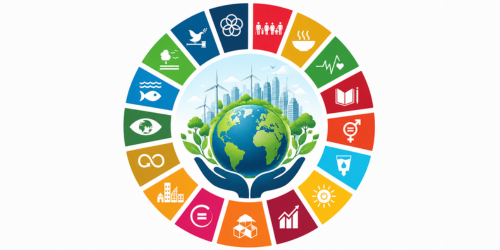
In 2015, the United Nations introduced the 17 Sustainable Development Goals (SDGs) to create a better future by 2030. These goals include:
- Ending poverty
- Zero hunger
- Quality education
- Clean water and sanitation
- Affordable clean energy
- Climate action
- Sustainable cities
- Responsible consumption
The SDGs provide a global framework for countries to work together toward environmental protection and human development.
India and Sustainable Development
India faces unique sustainability challenges because of its large population and rapid urban growth. However, the country is also taking important steps toward sustainable development.
Major initiatives include:
- National Solar Mission
- Swachh Bharat Abhiyan
- Promotion of electric vehicles
- River conservation projects
- Renewable energy investments
India has emerged as one of the world’s fastest-growing renewable energy markets and continues to promote green infrastructure and digital innovation.
Challenges in Achieving Sustainability
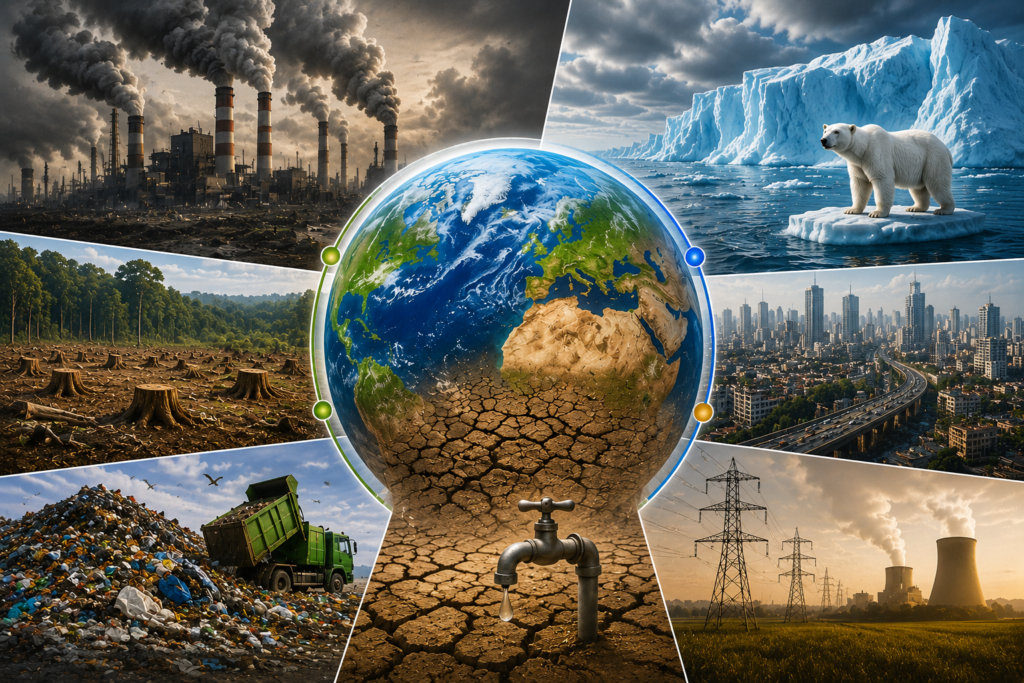
Despite growing awareness, several obstacles remain:
Rapid Urbanization
Cities are expanding quickly, increasing pressure on water, transportation, housing, and waste management systems.
Overconsumption
Modern lifestyles encourage excessive consumption, creating unnecessary waste and resource depletion.
Industrial Dependency on Fossil Fuels
Many industries still depend heavily on coal and oil, making the transition to clean energy difficult.
Lack of Awareness
In many regions, people still lack knowledge about environmental conservation and sustainable living practices.
Economic Inequality
Poor communities often prioritize survival over environmental concerns, making sustainability harder to implement.
The Role of Individuals
Sustainable development begins with everyday actions. Individuals can contribute through simple lifestyle changes:
- Reducing plastic use
- Conserving water and electricity
- Choosing public transport
- Supporting local and eco-friendly products
- Planting trees
- Recycling waste
Collective individual action can create a massive positive impact on the environment.
Conclusion
Sustainable development is no longer just an environmental concept; it is a necessity for human survival and global stability. Economic progress without environmental responsibility can lead to irreversible damage. The future depends on creating a balance where development improves lives without destroying the natural systems that support life itself.
Governments, businesses, and individuals must work together to build a world that values both progress and preservation. Sustainable development is not about stopping growth — it is about growing wisely, responsibly, and fairly.
The choices made today will shape the future of generations to come. A sustainable world is not only possible but essential for humanity’s long-term survival and prosperity.
Leave a Reply